shl asia | architecture | landscape | artwork

SHL Asia’s Feature on Lumion Indonesia’s Website

shl asia | architecture | landscape | artwork

It is officially 2 more months before the end of the year. When the pandemic hit earlier this year, many were shocked and wasn’t sure if they would make it. We are lucky to be surrounded by inspiring and positive friends, partners and clients that continue to support and keep us going throughout the year. With each baby step we took, we grew stronger and the universe slowly coming to our side. We were thrilled when we got the opportunity to be featured on Lumion Indonesia’s official website.

SHL Asia has been using a registered and licensed Lumion software program for years from the official Lumion distributor, AppliCAD Indonesia. We figured that 3D visualization is a highly added value beside some neat and thorough block plan or schematic drawings for a design consultant. It explains the concept better with striking visual and much easier to be understood for non-experts. With this in mind, we have developed Art by SHL Asia that specialized in making 3D visualization for images and videos.

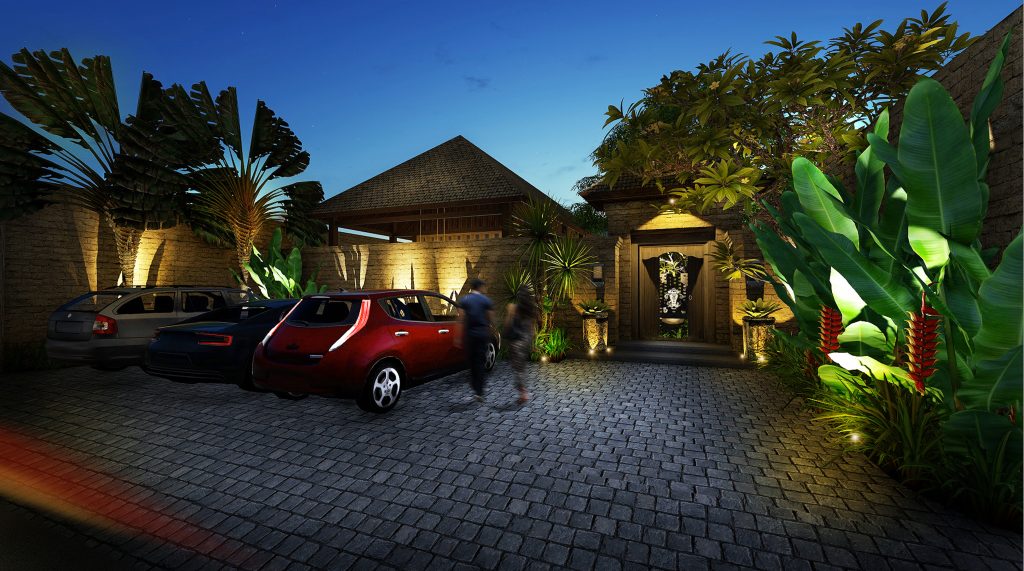
When we were asked to submit to Lumion Indonesia, we considered few different projects but ended up choosing Adiwana Jelita Sejuba Natuna and a Private Villa design in Sidemen. Adiwana Jelita Sejuba Natuna is a boutique resort project located in Natuna, Riau Islands. It is our first ever project in the area and we feel absolutely excited to be involved in developing its potential. The site seated right at the shoreline of beautiful Jelita Sejuba beach with magnificent giant boulder stones and crystal clear water all the way to the horizon. It is quite surreal, almost as we are transported into a prehistoric time.

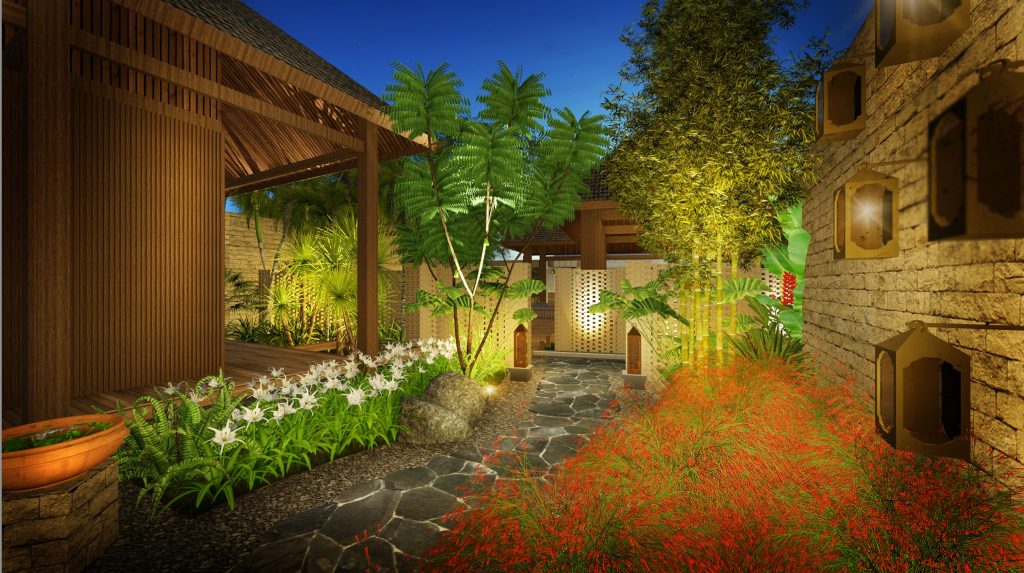
On the contrary, the second video presents a private villa nestled in the peaceful Sidemen village, in the east of Bali. The location is right by the river with serene nature around the area. The style of the villa gravitates more to hippie manner with the concept of star gazing under the clear sky of Sidemen. There are a lot of big opening with tall glass windows and glass roof over the woven wooden roof. It has white tone exterior that gives see-through effect to the building. The architecture is open and airy allowing direct view to the river.

On both videos, we emphasized on the design experiences rather just focusing merely on the design. The video indicate different lighting at different times of the day, there are people’s interaction and also ambience when the project is completed. We create storyline for each video to enhance the design and bring them to live. For a complete story, check out our featured videos on Lumion Indonesia’s official website.

Cheers,

SHL Asia Team

shl asia | architecture | landscape | artwork

The Rising Popularity of Concrete on Bali Architecture Map

Concrete in Bali

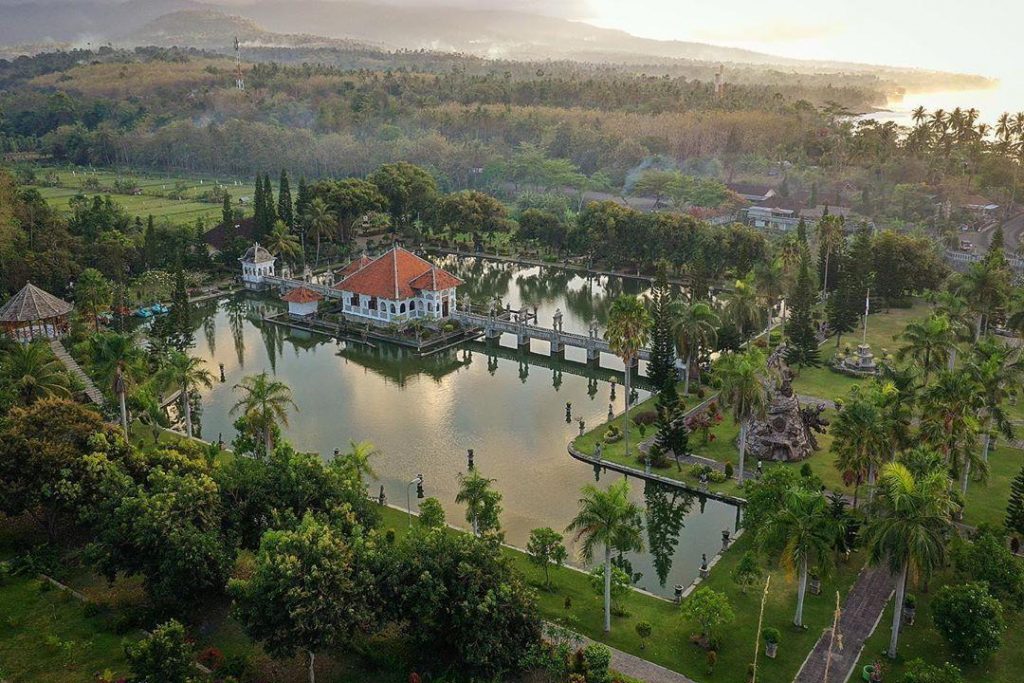
Here in Bali, the Balinese red bricks characteristic is slowly shifted to other different materials, such as concrete. Although concrete is not common in traditional Balinese buildings but it has made its way to Ujung Water Palace (Taman Ujung) in Karangasem where it was used its renovation after Mount Agung eruption. The palace was originally built by the King of Karangasem, I Gusti Bagus Jelantik and it is a privately owned by Karangasem Royal.

shl asia | architecture | landscape | artwork
Picture Courtesy of @dewandra via Instagram (https://www.instagram.com/p/CFIya4hBsl1/)

In modern architecture of Bali, concrete is usually left in its exposed state in order to create a raw, industrial statement. Using concrete to form simple but striking volumes of different shapes and sizes is a common approach, often designed to create architecture that contrasts with nature, yet feels grounded within its context.

Tropical Brutalism Architecture

Concrete is now becoming more popular in the island. One of the reasons is due for its reflective nature. Concrete reflects heat as opposed to absorbing it, making it suitable in this tropical climate of Bali.  More commercial buildings, art spaces even private houses are now implementing raw concrete finish and often adorn with tropical softscape. This concept is also known with the term of “Tropical Brutalism.”

shl asia | architecture | landscape | artwork

Some of the most interesting architecture today lies in the architects’ ability to find a connectivity of buildings and nature by combining it with other materials like wood, glass and steel for that twist of design. Concrete and wood is particularly popular pair in Bali. Combining woodwork adds warmth and ease to a massive concrete building impression. It also picks up more texture and pattern to the concrete backdrop.

shl asia | architecture | landscape | artwork

Nicolas Schuybroek X SHL Asia

The concept is implemented for a private residence in Tabanan area, a collaboration on-going project between an international architect, Nicholas Schuybroek, as the principal architect and SHL Asia as the local architect. Nicholas’s architecture style is heavily influenced by minimalism and simplicity. His projects often use concrete material, including the one in Bali. SHL Asia will add more tropical feel to overall design through the simplistic tropical garden. Although the design looks modern and minimalistic, the details are exquisite. It may seem cool from its exterior, but the interior and furniture give warmth throughout the house creating a sense of balance.

shl asia | architecture | landscape | artwork

With the endless possibility that concrete can offer, it is no wonder that it gotten more and more popular in the architectural map across the country especially in this island. The challenge for architects will be to ensure that such innovation would not replace or overshadow the vernacular architecture of Bali, rather it can be combined and integrated with such harmony creating an extraordinary contemporary design.

Cheers,

SHL Asia Team

shl asia | architecture | landscape | artwork

A Decade of SHL Asia: Thank You to the Universe

shl asia | architecture | landscape | artwork
Thank you to the Universe

It seems crazy to write this: SHL Asia is celebrating its 10-year Anniversary. We have crossed yet another milestone in the history of SHL Asia. A decade in the industry seems a lot but we are still far from done. Out of all things, we just want to say thank you to everyone and everything that have played important roles in furthering our cause. Most of all, we want to thank you the universe.

SHL Asia started with a crazy idea from three Balinese late 20-somethings to start their own design consultant and 10 years later—here we are, making design all across Asia.

Things, however, are slightly different this year. Our decade’s celebration happens in the same year as the pandemic which that means all plans would have to be put on hold until we can safely celebrate together. For now, we are virtually celebrating this glorious achievement while take the time upon reflection and express gratitude.

To the universe,

Thank you for letting us see our work as love instead of something to do.

Thank you for another chance to see the magic in every ordinary thing that isn’t ordinary at all.

Thank you for the new ideas, the inspiration that comes, even if it’s the kind that comes middle of the night.

Thank you for the nature surround, for the sound of flowing water, for the smell of morning dew, for the song of the birds chirp, for the voices of the wind blows through the trees and for the feel of green grass on our feet.

Universe has allowed us to keep moving forward and let us create.

Thank you to SHL Asia family past and present – all of the team, everyone who has ever worked with us. To SHL Asia current team, thank you for being the ultimate support system for this company.

To our clients and partners – that is far too many great names to list – thank you for allowing us to innovate and trusting us.

SHL Asia is not just about the business, it is about the people. The team, the clients and partners, the designs, the awards, the experiences and most importantly the value driven from these people—there are so much about this company that can’t be sum in to one article. But one thing for sure, something big awaits to happen for us but for now let us celebrate 10 years of SHL Asia by sending our gratitude.

Thank you

Cheers,

SHL Asia Team

shl asia | architecture | landscape | artwork

Hospitality Design: Create Experience That Last

shl asia | architecture | landscape | artwork
Adiwana Jeevalokha

Hospitality Design

When talking about hospitality design, one must enhance its visual as well as its functionality that fulfill the needs of users. Hospitality designs generate an experience. Although there are many factors that contribute to that experience such as service, dining and cleanliness, it always starts with the first impression: the design. When guests first arrive, they see the façade, and then start to explore the lobby. If they feel off or even unimpressed, that could set the tone for their stay. If the design energy amazes them, this could secure the guests who will not only return but also tell others about their experience.

The Famous Bali Style

As one of the top tourist and hospitality destinations, Bali offers numerous places to stay ranging from boutique hotels, private villas and high-end resorts. Many of them portray Bali style which incorporates traditional Balinese architecture to the design. The famous “Bali style” was introduced and popularized by foreign architects such as Peter Muller, Geoffrey Bawa and Kerry Hill. The knowledge transmission of local architecture became their tools to carry on local tradition and stood equally to the most sophisticated architecture work while still holding onto local values. They have broken doubts from the society that Balinese architecture was merely houses and sacred buildings. This also have encouraged other architects to then study and develop Balinese architecture more, just like us.

shl asia | architecture | landscape | artwork

As a Bali based hospitality design consultant, our work is both functional and visually exciting. We always strive to integrate local culture into our design. It could be the architecture, folk stories or even nature surrounding, it is all part of the Bali culture. We want to create a journey experience that can be long remembered even after the guest leave just like exactly the purpose of hospitality design is.

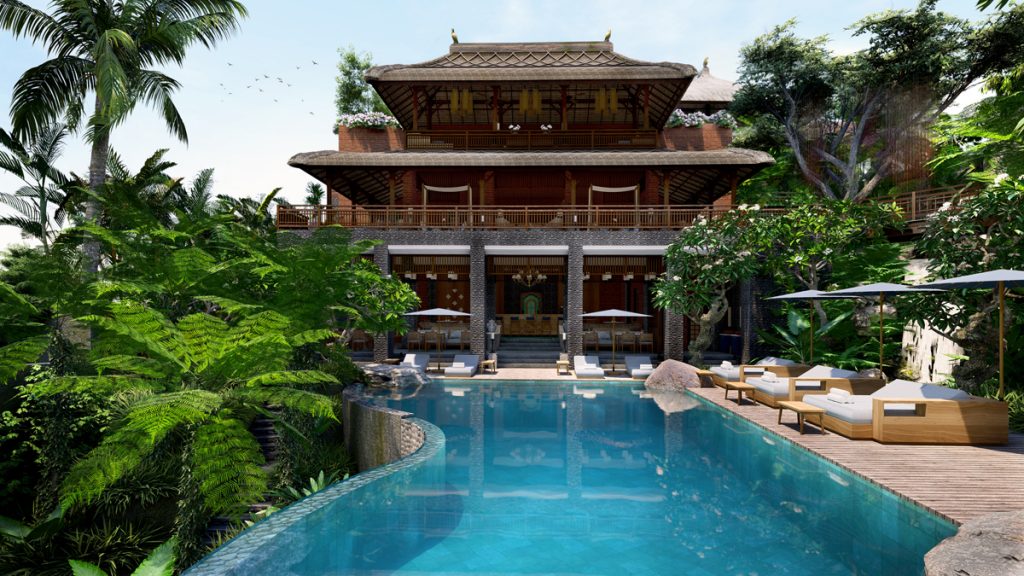
Adiwana Jeevalokha, A Sanctuary for The Soul

One of our on-going projects reflects all these needs, a secluded boutique hotel, Adiwana Jeevalokha by Adiwana hotels. Jeeva means live/soul and lokha means a world/place. The word is derived from Sanskrit which basically means a world or place for the soul. Adiwana Jeevalokha was designed as the sanctuary for the souls, a place to unwind from the hustle and bustle of modernity.

The project is located in Ubud, a village in Gianyar. The village is long known for cultural and art center as well as beautiful lush landscape. Nowadays, however, the village and even Bali in general has slowly shifted away from its tradition. A number of newly built architecture takes on more modern approach that is far from Balinese architecture. With that in mind, we want to create a sanctuary where guests can experience how Bali truly is, the Island of Gods, a peaceful place.

Traditional Balinese Architecture

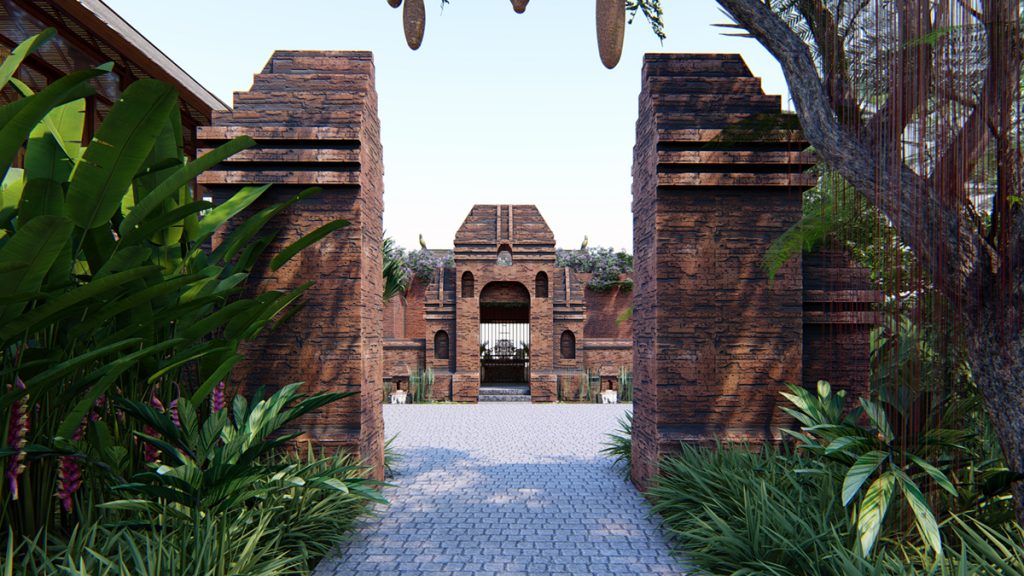
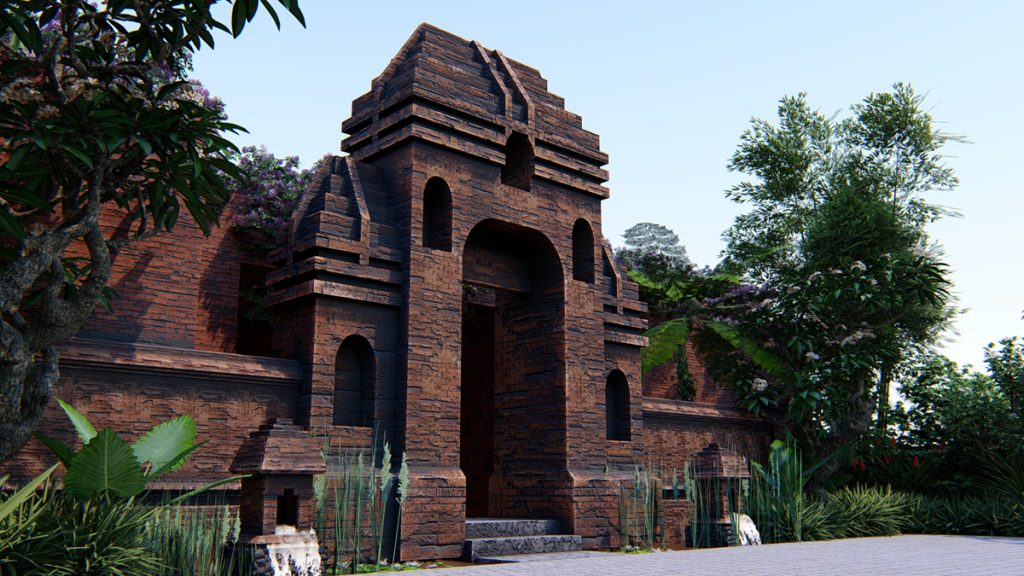
Candi Bentar gate for entrance

Red bricks to accentuate local materials

Architecture wise, the building implements various Balinese architecture elements to truly reflect how Bali in the past. Although the overall typology of the building is a simplified Balinese architecture, the details, however, speak for themselves. Right from the entrance, guests are welcomed by an inspired Candi Bentar gate, a gate to enter the outer area of a palace or temple in Bali traditional layout zone. Going in to the inner area, there is Candi Kurung gate, a gate between outer and inner area of the hotel. Other than that, the hotel is designed into few building compounds implementing the natah concept in Balinese houses. The architecture harmoniously uses local materials such as red bricks and natural stones to really accentuate the feel of traditional Bali.

Landscape Inspired by Nature

shl asia | architetcure | landscape | artwork
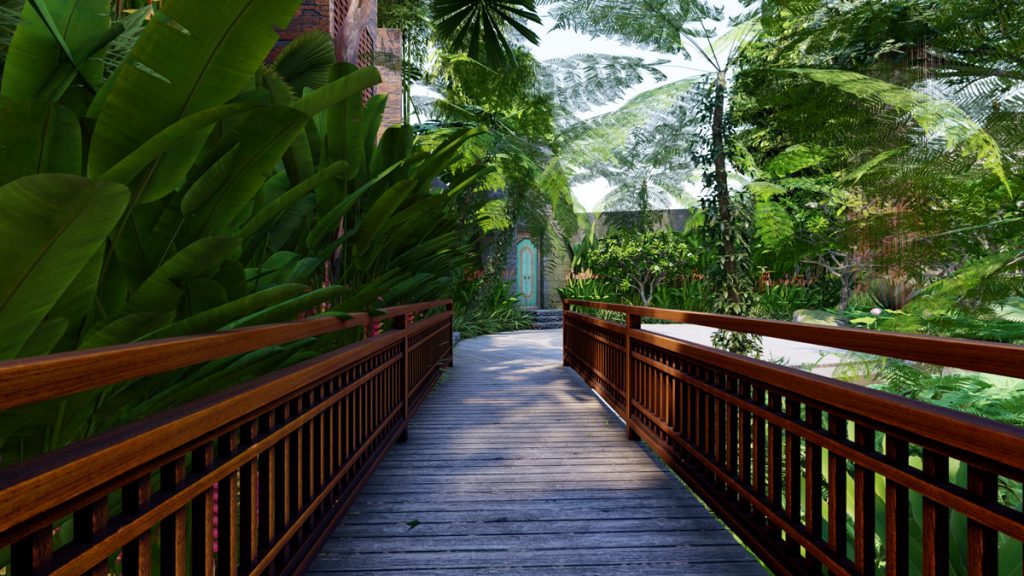
Lush landscape left and right

To complement the architecture, the landscape is inspired by the rich culture and beautiful nature around the site. It is designed to be tropical and lush just like the environment on site. It is aimed to feel like natural jungle hence we play around with a lot of layering and composition to make as if its nature-made. The landscape is also completed with some water element for calming and rejuvenating effect through a natural waterfall where the stream flows across the site. By staying to Bali’s root and close to the nature, Adiwana Jeevalokha creates an experience that not only distinctive but eases the soul.  All these components have come together to deliver a whole design experience that last for the guests. A moment to disconnect and find peace at Adiwana Jeevalokha.

Adiwana Jeevalokha – Design by SHL Asia

Cheers,

SHL Asia Team

shl asia architecture | landscape | artwork

A Quick Update From SHL Asia

shl asia | landscape | architecture | artwork

It has been almost four months since the first outbreak of covid19 in Indonesia. The government has announced health protocols which resulted for most offices working from home and quarantining in all the states throughout the country and so is Bali. Although things have gotten slowing down for many of us, but SHL Asia team is still on grinding as ever.

The team is working on some of the design-phase projects such as Sanna villa in Ubud, few of our projects in India and the new Adiwana Hotels project. While most of our on-going design phase projects still going, some of them need to put on hold until undetermined time. As much as it is hard to admit, we have to understand the situation. With this pandemic happening, tourism basically has been shut down and so have many hospitality projects. However, with every storm comes a rainbow. We got the chance to reevaluate our company and preparing a grand comeback once the condition is (new) normal.

Set that aside, our construction projects are going according to schedule but of course followed with bunch of adjustments on site. The team have been kept busy following up issues and coordinating with all parties involved. Some of the projects include our collaboration project with Nicolas Schoeybroek for a private villa in Tabanan, a project with Tierra Design Thailand for Andaz Bali Resort and a collaboration project with Yoka Sara Byrdhouse Beachclub in Sanur. We do conduct frequent site visit to these projects for supervision  purposes. All activity on site is done carefully following the health regulation due to the outbreak.

shl asia architecture | landscape | artwork

Going back to SHL Asia studio, things have slowly gotten back to  (new) normal. Our small team has been working in office with strict health protocols such controlled hygiene practice, mask usage and physical distancing. While safety and health of our staff is our top priority, at the same time we are still committed in delivering a high quality products and services for clients. Yes, it is a hard time for all of us but that does not mean we give in to the situation. We are trying our best to keep things going and do our own part to make it better.

Cheers,

SHL Asia team

shl asia | architecture | landscape | artwork | garden of andaz

Garden of Andaz

Andaz by Hyatt is an exquisite hotel and resort chain that is infused with local destination’s culture. Each hotel is unique on its own way, with locally inspired architecture that delivers authenticity. In Bali, Andaz is located in Sanur—a mature coastal village in the southern east of the island. It is our collaboration landscape project with Ketut Suratman of Rimba Bali and the masterplan from Tierra Design Bangkok. The Garden of Andaz is the manifesto of modernity and traditional. It synergizes with the architecture design, a tropical resort getaway installed with a touch of traditional Balinese element, such as thatches roof and red bricks.

shl asia | architecture | landscape | artwork | garden of andaz

Andaz is a newly established resort in Sanur—unlike its neighbor, Hyatt Regency Bali that have set its foot there long way before Andaz. Coming from the same client and operator, Andaz has similar nuance like Hyatt that accentuate the feel of typical Balinese resort. However with Andaz, the design has more modern approach to the overall look. Although the building inspired by Balinese architecture, it is not as heavy and rich as Hyatt thus the landscape follows. The landscape is a combination of tropical Balinese and simplistic garden.

shl asia | architecture | landscape | artwork | garden of andaz
Simplistic garden
shl asia | architecture | landscape | artwok | garden of andaz
Hues of greens

Despite its location by the beach, the original site of Andaz was a dense wilderness full of mature old trees and dense greeneries. These old trees were preserved to keep the lush image for its landscape. The existing trees include Sacred Fig (Ficus religiosa) and Indian Jujube (Ziziphus mauritiana.) To complement the landscape even more, various kind of tropical plants are inserted, such Giant Taro (Alocasia macrorrhizos) and White Frangipani (Plumeria alba) as well as plants that are commonly found in beach area, like Seagrape (Coccoloba uvifera) and Screwpine (Pandanus tectorius.) Garden of Andaz is kept minimalist using only few colors focusing on hues of different shade of greens. SHL Asia is collaborating with Rimba Bali Garden as the landscape contractor to provide high quality plants with outstanding landscape maintenance.

An old existing Sacred Fig tree (Ficus religiosa) is part of the landscape
shl asia | architecture | landscape | artwork | garden of andaz
Beach plant Seagrape (Coccoloba uvifera) in front of bedrooms unit.

To complete the landscape, simple artworks are placed in various areas. For example, at the lobby, we installed a water feature placed in the middle of ankle deep pool to welcome the guest. Water feature are often found in resorts to give a calming and cooling sensation to guest which come from the water sound. The artworks draw attention without overshadow the surrounding, rather to blend in with rest of the landscape.

Currently the construction work is about 95% done and is expected to open by the third quarter of this year. To ensure the quality of the work we conduct weekly supervision on site along with Rimba Bali team. Aside from that, coordination with the principal architect from Tierra Design is frequently conducted together with our weekly supervision report to avoid any misunderstanding which often happens with long distance coordination.

shl asia | architecture | landscape | artwork | garden of andaz
Supervising with landscape contractor, Rimba Bali team.
shl asia | architecture | landscape | artwork | garden of andaz
Walking through Garden of Andaz

With all the challenges, we managed to produce a landscape design that complements the architecture really well. The whole ambience truly vibrates a modern Balinese resort, especially when guest experience the garden of Andaz.

Cheers,

SHL Asia Team

shl asia architecture | landsacpe | artwork

Presenting Identity: Balinese Local Materials at Taman Umanda

shl asia architecture | landsacpe | artwork

Bali has gained popularity not only for its breathtaking and picturesque landscape but also traditional Balinese architecture as its identity. It is in fact, one of the most popular Asian tropical architectural styles that has been used by resorts in Asia, especially in Southeast Asia. Numerous luxury villas and resorts are using the traditional Balinese style combined with modern elements.

One of the characteristics of Balinese architectural style is its distinct flair for being in harmony with nature as one of the three causes of Tri Hita Karana. It strives to preserve the nature and promote the sustainability, keeping balance of the environment. One of the ways is through the application of locally sourced natural materials.

The Role of Local Materials

Using materials that are local and natural is environmentally friendly – it cuts the distance materials need to travel, cutting down on the pollution created during transportation. It also reduces the cost of production process and supports the local craftsmen in the area.

Local materials are the resources that can be found in huge number at a particular location or area. These materials could be plentiful in some area but not available in another. The traditional Balinese houses use materials that are easy to find in the island like different kind of natural stones (sandstone, green stone), Balinese red bricks and bamboos.

Local Materials at Taman Umanda

One of our projects that uses a lot of local materials is Taman Umanda. It is a private residence project located in the heart of Denpasar. The project consists of compounds of houses with its own meditation area at the front. Because locality is often associated with identity, we wish to present the identity of Bali through the application of local materials. Other than that, they add more sustainability value.

shl asia architecture | landscape | artwork

The material that dominates the wall is paras batu Silakarang (Silakarang sandstone). Paras Bali Silakarang is a Balinese original soft sandstone of gray and yellow color. The stones are suitable for different kind of settings inside and out. They have high durability and can endure various seasonal changes. This is due to the fact that Bali sandstone is excavated from the core of stone mountains. The material is delivered from Gianyar, a region next to the city, which then assembled on-site in the front and on the side walls.

shl asia architecture | landscape | artwork
Close-up of Silakarang sandstone
shl asia architecture | landscape | artwork
Layout composition using Silakarang sandstone
Stacking sandstones
shl asia architecture | landscape | artwork
Balinese red bricks act as planter

In the back area, we intended to construct vertical garden using carefully arranged red bricks. Various architecture in Bali from temples, goverment’s buildings to traditional houses are using bricks as main accents. Bricks are made from a mix of clays and water which then fired in a kiln. With this certain project, these bricks are put together in certain angle to make small niches that act as wall planter.

shl asia architecture | landscape | artwork
The wall planter at the back using arrangement of red bricks & slate stone outdoor floor

Another local material applied in the project is Singaraja slate stone. This material is sourced from the North of Bali. Slate stones have uneven shape and surface due from intrusion of andesite stone. They are popular for exterior or outdoor application for its durability in extreme climate. In this project, the stones are used for the pathway and outdoor floors

shl asia architecture | landscape | artwork
Pathway using Singaraja slate stone

Currently the project is still under-construction until around the end of the year. As a whole, we wish to deliver the concept of using local materials. Aside from helping the enviroment, it presents the identity of Bali. The implementation of these materials help to maintain the authentic Bali nuance to the project.

Cheers,

SHL Asia team

bisma | shl asia | architecture landscape artwork

Landscape In The Villas At Bisma Eight: Less Is More

shl asia architecture landscape artwork
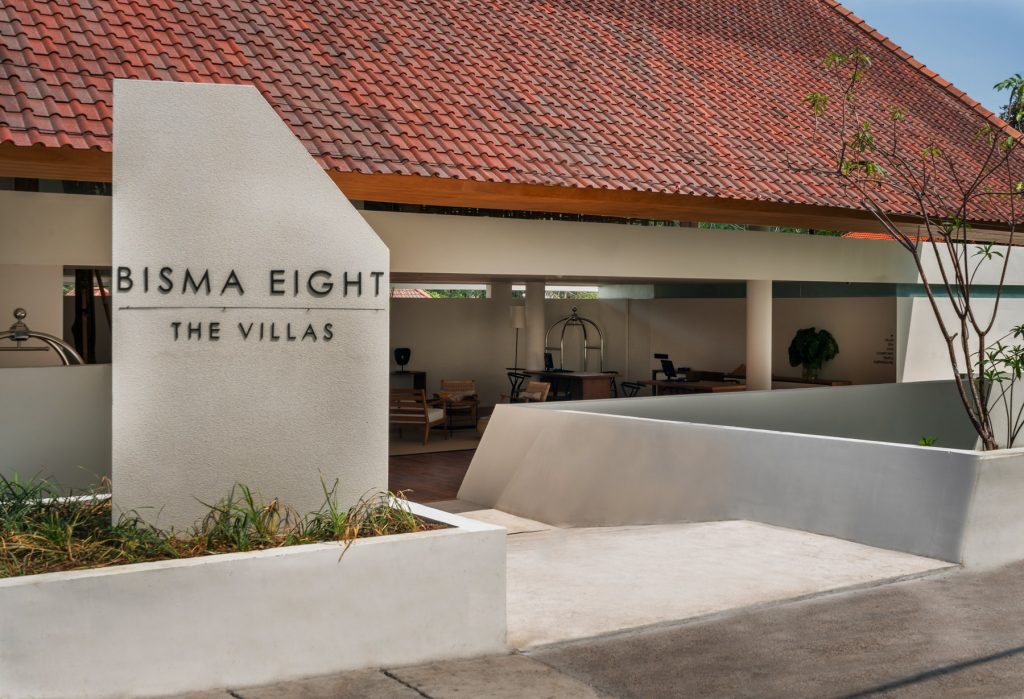
photo courtesy by @bismaeight management

The Villas at Bisma Eight (or we formerly called as Bisma Garden) is our most current finished landscape project located at Jalan Bisma in Ubud. Collaborated with the architect Andra Matin, it is the newest establishement from the same owner and management as our previous projects, Bisma Eight Hotel and Folk Pool & Gardens. Each villa is tucked behind walls for maximum privacy and complemented with its own pool, spacious rooms and secluded garden designed by SHL Asia . The landscape design is the response of  what the building needs, we put less to add more. We balanced it out by designing vibrant landscape creating ambience and to soften the overall look.

Landscape at The Villa

The inspiration mainly came from the client and the Ubud’s nature. The client wished to introduce the guests to what Ubud really is, a mixture of vibrant modernity and rich tradition that runs in harmony. The contemporary interior and building is combined with vibrant greeneries and local crafts. At the first glance, the Villa at Bisma Eight looks edgy and sharp but the more we dive into it, it now soften and homey with touch of details and the breath of plants. The villa itself was pursued to be exclusive and private, thus the public area was designed to be open and spacious.

shl asia architecture landscape artwork

Less Texture, More Color

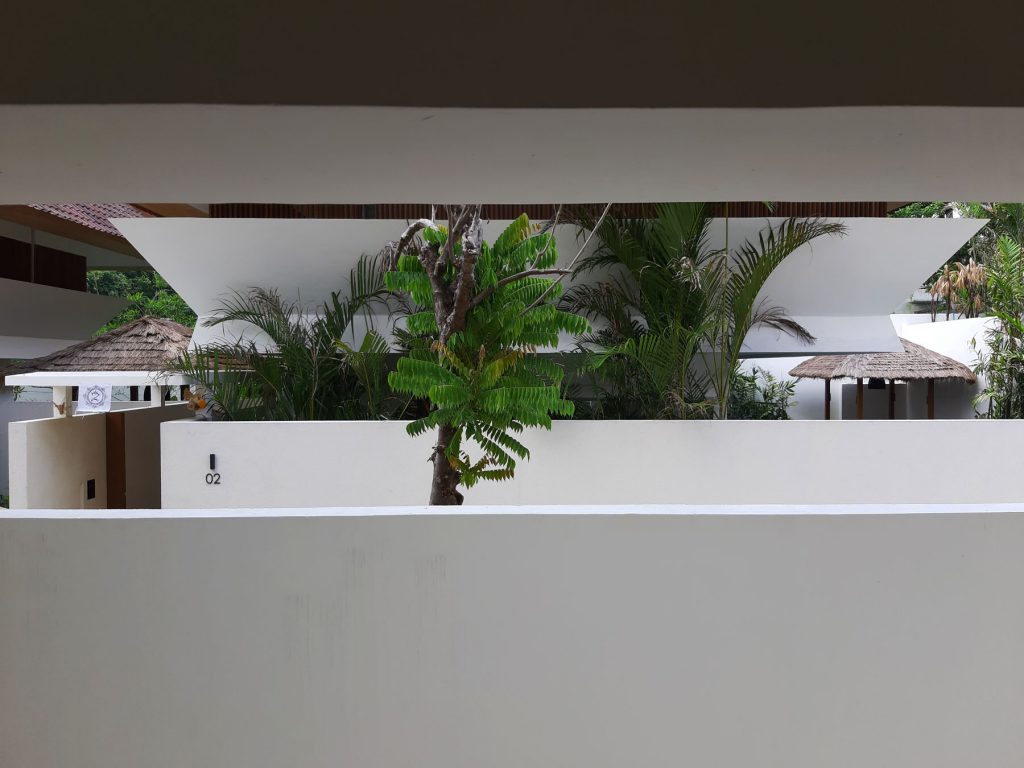
The public areas include lobby (entrance), spa, pathways and amphitheater/courtyard. The beauty of clean white exterior is it can be painted with various colors. In this case, the blank canvas is smeared with green hue from shrubs and trees and a touch of multicolor flower plants. During daytime when it is sunny out, these plants create an aesthetic shadow play on the white background walls. We put more colored softscape in public places but chose more simplistic plant so it would not overcrowd the area.

shl asia architecture landscape artwork
Marvel of peru ( Mirabilis jalapa)
shl asia architecture landscape artwork

shl asia architecture landscape artwork

Less Color, More Texture

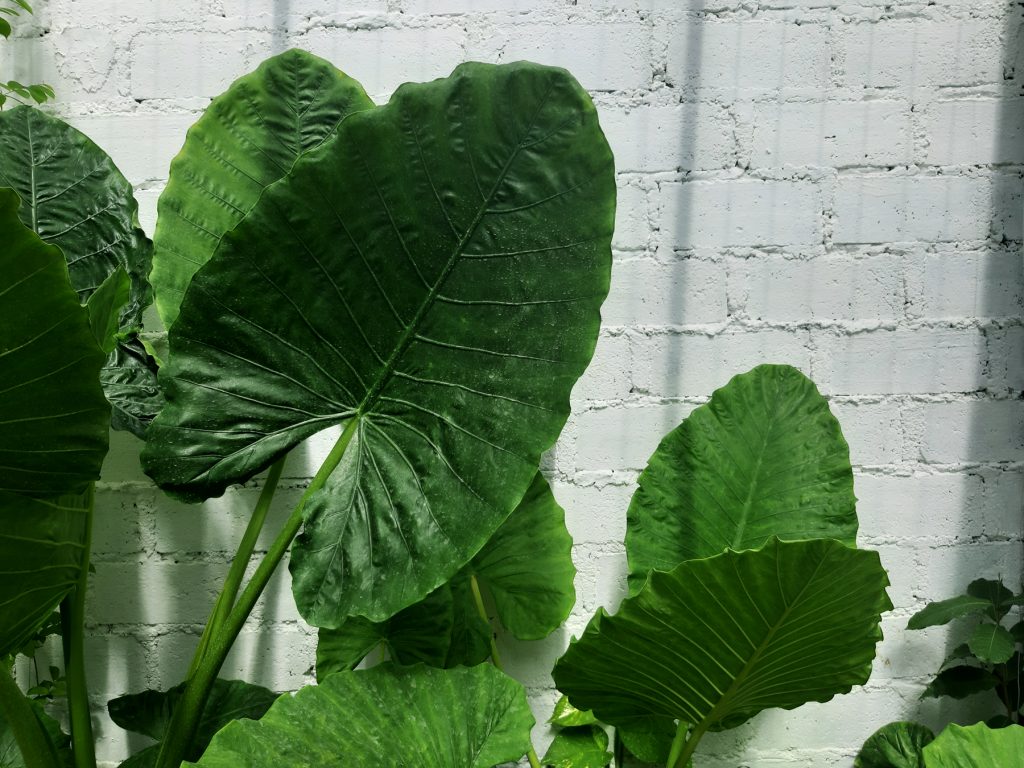
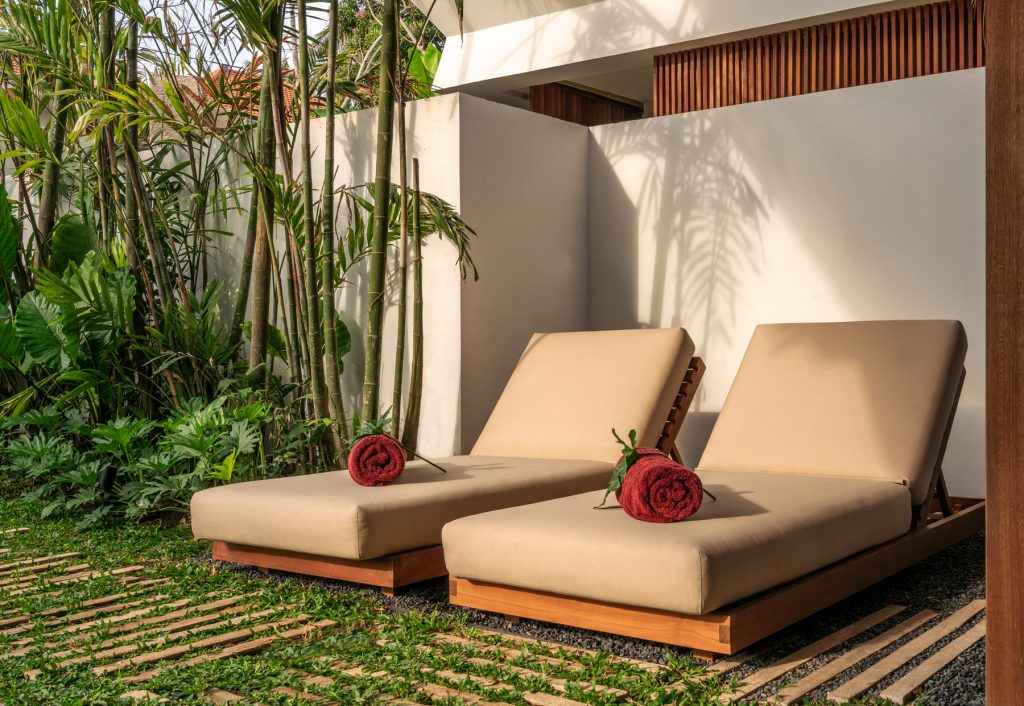
On the other hand, there is a secluded lush garden inside each villa. The landscape concept in private area is single color, focusing on different texture and shades of green. Some of the common plants in the villa’s garden are Areca palm (Dypsis lutescens) and Macarthur palm (Ptychosperma macarthurii). They have different height and unique texture to add density for the garden. Tropical plant like Elephant Ear (Alocasia) can also be found among them. It has big foliage and nice green color that suits the concept. Beside the softscape, the landscape inside the villa was completed with hardscape like wooden stepping, earth tone artwork and an outdoor shower made from natural stone.

shl asia architecture landscape artwork
photo courtesy by @bismaeight management
shl asia architecture landscape artwork

Hardscape

The hardscape in general is dominated with muted textured white walls and terrazzo pathways. It looks clean and almost dream-like from very little color. The rest of it is kept minimalist. Other than plant, it is decorated with stones. Big stone, little stone. There are dark grey pebbles in most area, by the pond, surrounding the pool and even in open courtyard side to side with some beds of grass. It adds more texture and color for the landscape.  Public places also decorated with boulders for more variation. Boulders stones are place strategically along the pathway creating a balance composition of softscape, hardscape and building.

shl asia architecture landscape artwork
small grey pebbles
shl asia architecture landscape artwork

Artwork

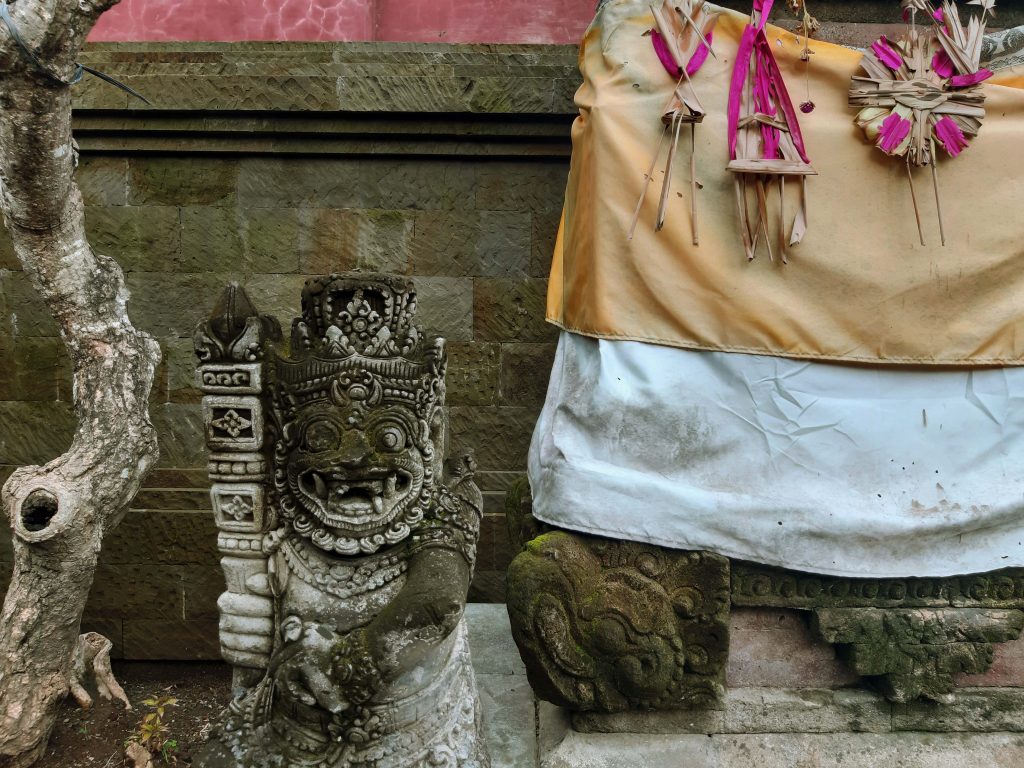
There is not much artwork throughout the villa. We wanted to keep it very minimalistic thus avoided heavy carving artwork that is commonly found in many resorts. Instead, we use water barrel made from terracotta. Originally water barrel is one of the Balinese household items to contain water on daily basis, however we use it merely for artwork. We matched the tone of the artwork with the roof tile of the buildings that also has the terracotta color. Both artwork and tiles have the same rustic,timeworn-like finished.

Overall, the landscape design at The Villas was aspired to complement the design. The combination of different plants and texture are put together creating simple yet and it what represents the humbleness of Ubud.

Cheers,

SHL Asia Team