01_Villa-Cahya-Blog_Title-Image_1200x600

Villa Cahya Estate: The Art of Living.

We are proud to present a project very close to our hearts as we invite you to explore Villa Cahya. A magnificent tropical Villa Estate concept masterfully appointed for a lifestyle experience.

Enter a world of effortless elegance, where vintage charm and classic sophistication blend seamlessly with the lush embrace of the Balinese jungle. Situated on the doorstep of Bali’s vibrant cultural hub of Ubud, Villa Cahya goes beyond just architecture, embodying a celebration of artistic beauty, sensory harmony, and exquisite living.

The opportunity is also now available to invest in this magnificent project. With a comprehensive development plan, complete management & operations strategy, and attractive Return on Investment structure, the Villa Cahya Estate offers an excellent business & lifestyle choice. Read to the end for more details on how you can express your interest.

The Development Approach: Conceptualising a timeless classic.

The challenge was provided for the SHL Team to create a truly engrossing, expansive and feature-rich private paradise for large families or holiday groups to spend unforgettable and extended quality time together in serene, relaxed luxury. Expressed through the stylings of a Classic, Vintage, and Industrial motif, against the backdrop of the emerald jungle, the opportunity was ripe for this masterpiece of tropical living to emerge.

Setting the stage perfectly for such an endeavour is the outstanding location. The Villa Cahya site is perched high on an awe-inspiring 2285m2 block with spectacular jungle vistas over the expansive Petanu River Valley. With a west-facing aspect offering glorious sunlight hours from late morning through to the dazzling sunsets in the evening, the location provides the perfect architectural canvas for this extraordinary property development.

Some of our deeper considerations in delivering the Villa Cahya project are as follows;

Feature richness: Ultimate lifestyle indulgence.

The estate showcases 5 levels of superb features across 822m2 of Floorspace, with an additional 1041m2 of divine landscaped jungle gardens. With alternative layout options available, the maximum 5-bedroom / 6-bathroom configuration is so meticulously and abundantly appointed the notion of leaving the property may not even cross one’s mind.

Highlighted features include; The Iron Bridge Entrance (modelled on Ubud’s Old Tjamphuan Bridge), Entrance Gallery, Heritage style Cinema & Wine Cellar, Grassed Firepit Terrace, Private Waterfall Pavilion with Jacuzzi, Cold Plunge & Sauna, and so much more.

Why Classic, Vintage, Industrial?

Villa Cahya has been developed in Classic, Vintage & Industrial design theory because it is timeless. Classic never goes out of style. This ensures the property always remains stylish, and relevant and never falls out of fashion even as the decades pass by.

Careful consideration must also go towards the long-term management of the property in regards to the demanding elements of the Balinese tropical environment. As modern properties quickly become prematurely and significantly aged beyond their years and require extensive upkeep, Villa Cahya embraces nature’s qualities. As is the nature of the vintage yesteryear motifs, we encourage the materials to become aged, the elements to take hold, and the jungle to merge with the property. As the grounds become more established, so too shall the character & charm. This serves to significantly decrease the ongoing cost of upkeep and increase the value of the property overtime, as opposed to properties failing to make this long-term consideration.

In flow with nature.

Villa Cahya thoughtfully merges elegant classic design with the enchanting Balinese jungle environment, focusing on sustainability, aesthetics, and ethics. In parallel with the classic design theory, as the natural elements of the property mature, its charm and value also increase, accentuating the fusion of nature with the beautiful lifestyle design more so over time.

The Architecture and landscape design blend seamlessly with natural elements, creating a tranquil immersion and an ever-present connection to nature. Paramount to the development is the preservation of all the old-growth trees on the property, maintaining the natural splendour while establishing the grounds from day one. From the moment you arrive, you will feel embraced by nature’s healing qualities throughout the estate.

A celebration of cultures.

The pursuit for the finer things in life should be a universal search for that which captures the true essence of taste and refinement. We celebrate this without borders, where a rich tapestry of international design flavours comes together. Blending Western vintage industrial motifs with cultural influences from exotic artisan craftsmanship from all corners of the earth, Villa Cahya is a truly international affair.

The property features carefully selected materials and art from Bali, Java, Lombok and beyond. With Indian Slate, Moroccan Glass Tiles, and Arabic, Mexican & Iranian soft furnishings, Villa Cahya is a mesmerizing statement of worldly charm, offering a feast for the senses from around the globe.

Fashion & function.

In addition to its aesthetic grandeur, Villa Cahya prioritises comfort and convenience. Every aspect of the design, from maximizing the breathtaking views to the thoughtful placement of your morning coffee, everything has been meticulously planned. Cleverly concealed features also surprise and delight, enhancing the property’s eclectic appeal.

The dual-purpose nature of the property, serving as both a family home and holiday rental, is carefully considered. All common areas are designed to facilitate quality time for families or large holiday groups. Staff workflows are also thoughtfully configured for maximum efficiency and discretion, ensuring a positive experience for both guests and the onsite team.

Dual purpose living: The Family Home.

There is no greater priority in life than the well-being and quality of life of your family. Situated close to the conveniences of the bustling Ubud town centre, famed for its warm, conscious, hospitable nature, yet nestled in the serenity of bountiful nature, there is no more wholesome place for the enrichment of the family.

The spacious estate caters to large families, providing ample space for quality time together or apart. With alternative layout options to cater to your specific needs, Villa Cahya ensures comfort and flexibility for families, whether it serves as a permanent residence or a home away from home.

Dual purpose living: The Luxury Holiday Estate.

Doubling as an exquisite luxury holiday destination, Villa Cahya is configured towards large groups of up to 10 guests, offering ample space for intimate moments or group celebrations. From lazing together in the Waterfall Pavilion, a banquet in the Dining Area, enjoying a nightcap in the Living Area or gathering around the Firepit under the stars, Villa Cahya is configured for optimal group interaction. The villa is designed for an easy transition from private home to rental status, and with a comprehensive management plan, owners can expect a seamless investment experience and generous returns, whether as a full-time rental property or a part-time home.

The ‘Extended Turnkey’ opportunity.

Now available for investment, this incredibly unique Off-plan ‘Extended Turnkey’ luxury Villa development is also packaged with a comprehensive operations & management plan, hosted by the leading hospitality operations group, ‘Lead Luxury Management’. With a projected 8-year Return on Investment plan at an average return of 12.5% per annum, this exquisite estate is positioned to provide a very sensible investment opportunity and superb lifestyle choice.

To find out more and express your interest in the Villa Cahya Estate opportunity, contact our sales team by Phone or WhatsApp at +62 85100666991

20240103-P1030589

Timeless Harmony in Saka Museum

All are aligned with our book, “Timeless Harmony,” as the spirit of Saka Museum is to preserve timeless pieces of Bali. Our book records the spirit of timelessness through philosophy, design, and photographs by Rusdi Sanad. Inside this book, the reader is informed of how the natural beauty of Bali is the result of the unique perspective of Balinese called Desa Kala Patra. It is a teaching to give respect to place, time, and situation to acquire balance in harmony and spirituality.

The opening year of two thousand twenty-four is marked by the inauguration of a landmark in Ayana Jimbaran. Saka Museum — the name resembling the caka calendar of Bali — is dedicated to preserving a collection of timeless fragments ranging from ancient to contemporary Bali. This art sanctuary is placed inside the luxurious Ayana Jimbaran property and stands unique with its intriguing forms.

From a distance, the museum looks like a compass needle, with its sharp edges and fast slopes. It stands above a giant reflecting pond, showcasing an outstanding engineering marvel. The design is delivered by Mitsubishi Sekkei Ltd from Japan, and its style is very apparent with its combination of a strong engineering statement. Despite access still being exclusive to Ayana guests, we had the opportunity to enter the Saka Museum as part of the arrangement to present our culture book, “Timeless Harmony,” to be included in a portion of the collection. The honor is ours, along with Rusdi Sanad, to place our work in this timeless sanctuary.

Upon our arrival, we experienced firsthand the neatness of Japanese design when creating a public space. All materials are considered very easy to maintain, and the neutral colors create an unassuming ambiance for whoever walks inside. Once inside, the modern museum is a splendid sight. With everything being minimalistic, it draws our attention more to the collection. The ground floor is filled with collections of ancient sculptures from Bali, paintings, and poetry. One area is dedicated to Nyepi and Kamasan painting. If we move further inside, there will be a series of documentation of the design process and construction of the Saka Museum took a total of 4 years to complete.

We are guided into the library where Saka Museum stores rare and ancient literature of Bali. It ranges from lontar leaves to the first copies of famous books, all stored very elegantly in fully customized displays and reading tables. The interior provides a feeling of calmness and is very modest in terms of color. What catches our attention is a collection of Pawukon calendars.

Bali has its own time, guided by a calendar named Pawukon. It is a wooden board that indicates the passing of days and marks fortunate or unfortunate dates. It follows the Saka calendar, consisting of eight traditional weeks or “wuku.” Using this calendar, the people of Bali decide the best time to start planting rice fields, build a temple, or commence any ceremony. This calendar is beautifully carved and used over time; therefore, its utility is timeless in the realm of Balinese culture.

All are aligned with our book, “Timeless Harmony,” as the spirit of Saka Museum is to preserve timeless pieces of Bali. Our book records the spirit of timelessness through philosophy, design, and photographs by Rusdi Sanad. Inside this book, the reader is informed of how the natural beauty of Bali is the result of the unique perspective of Balinese called Desa Kala Patra. It is a teaching to give respect to place, time, and situation to acquire balance in harmony and spirituality.

Upon arriving in the main library where the Saka Museum stored relics and rare collections of literature, Chandra, our principal of design, and I introduced the book to the Saka Museum’s curator. Rusdi Sanad gives a short and beautiful explanation of why we are collaborating to write this book, where readers could immerse themselves in the visual spectacle through Sanad’s lens. Hopefully, what we have done in this book could provoke others to take part in cultural preservation — as is the vision of Saka Museum. This kind of spirit is what keeps us doing what we believe.

Balinese Vibrance Through Generations

LANDSCAPE HYATT REGENCY BALI

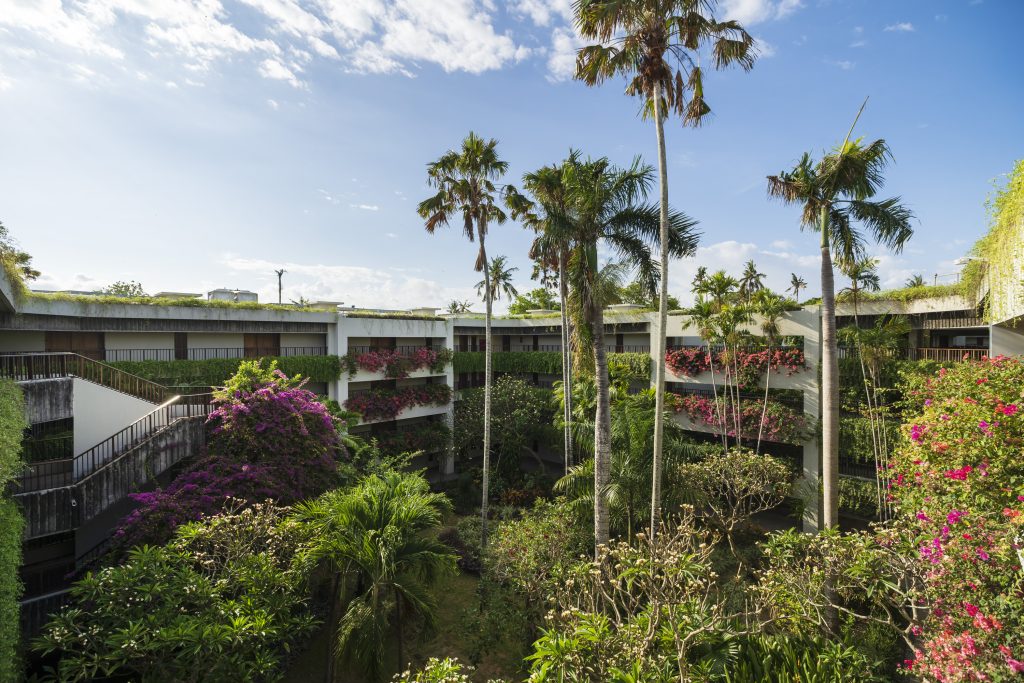
Three decades later, in the late 2013s, Bali Hyatt announced its closing to commence a major renovation in its interior and landscape as an effort to stay relevant. This is where we began our journey when SHL Asia was trusted to design the landscape update to rebrand as a ‘Hyatt Regency Bali’.

Imagine walking down Danau Tamblingan road in the 1960s, in the morning, to catch the salt breeze of the Sanur coastline. Emerging from behind the grove of coconut skyline is the only high-rise structure, Bali Beach Hotel (now Grand Inna Bali Beach), stated as the kickstart of Balinese tourism. At the time, Sanur itself was already attracting tourists and artists to spend their holidays or even permanently stay there. Tourism in Southeast Asia was emerging as a promising prospect, so it is no wonder that Hyatt Hotel Corporation was aiming for expansion to Bali. The embryo took shape when Hyatt acquired a large piece of land originally purposed for a large hotel facility named Hotel Matahari and began the project in the late 1960s. The project was formally completed in 1973, becoming the first large hotel and resort to incorporate Balinese traditional design. This luxury was inaugurated under the brand of Bali Hyatt.

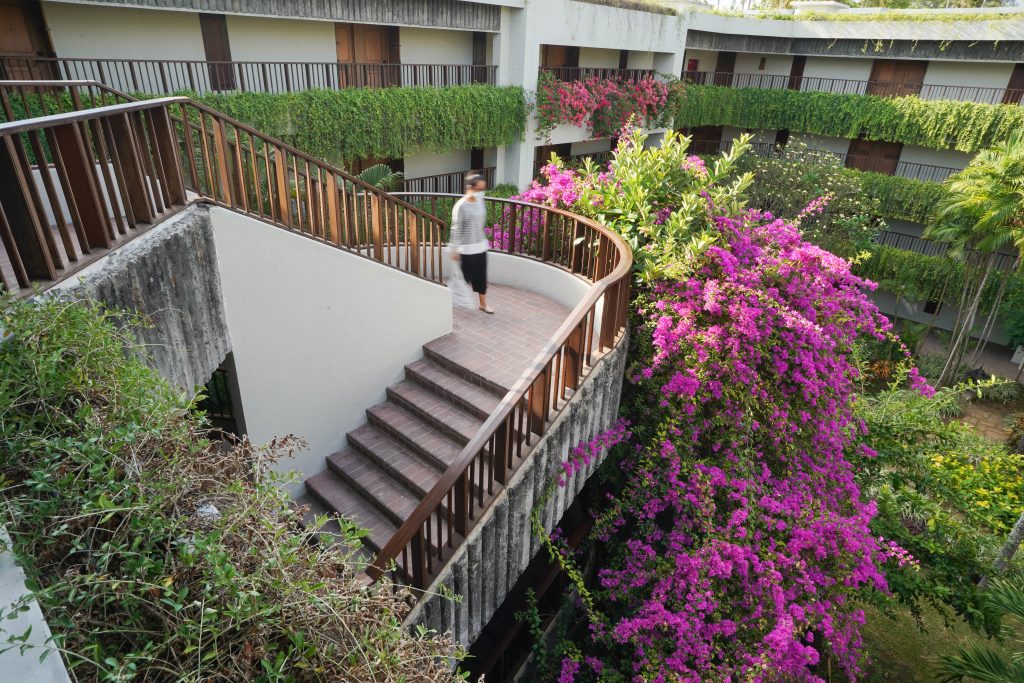
Bali Hyatt became the playground for various designers to witness their legendary touch. For instance, the grand design was crafted by Palmer and Turner, with Kerry Hill in charge of the project when he was still with their Hong Kong office. This resulted in the thatched roof long lobby and modern brutalist hotel block inside the bougainvillea garden. In the same decade, the design was finalized involving Geoffrey Bawa in the interior. In the 1980s, Made Wijaya and Bill Bensley provided their landscaping touch in Hyatt’s update. Three decades later, in the late 2013s, Bali Hyatt announced its closing to commence a major renovation in its interior and landscape as an effort to stay relevant. This is where we began our journey when SHL Asia was trusted to design the landscape update to rebrand as a ‘Hyatt Regency Bali’.

Taking a tour of the Hyatt, its entrance is already inviting from the very beginning. The entrance is full of vibrance and local materials indigenous to Sanur, much like the top of a Balinese offering adorned with flowers, signifying dignity in its local identity. If we look at Hyatt’s sister, Andaz, the contrast is very obvious as the latter prefers a simpler approach in terms of colorful ambience. The updates consist of rejuvenating the landscape ground cover finish with newer cobblestones and make it in pattern. Arriving at the roundabout of its drop-off, a thoughtful ‘Catur Muka’ sculpture signifies the four sacred directions – north, west, south, and east.

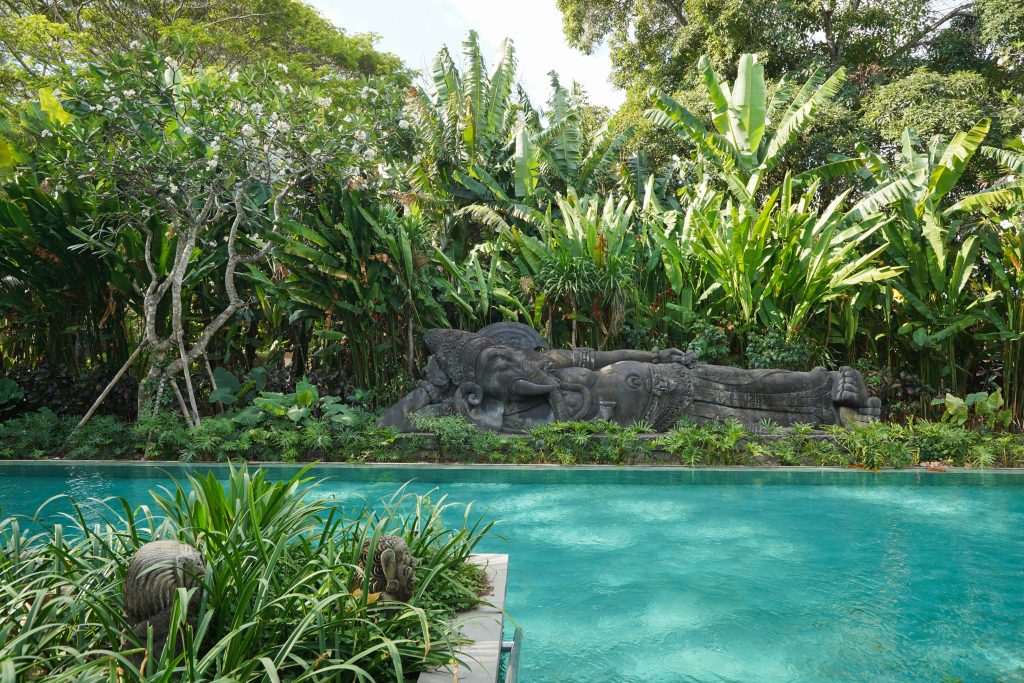
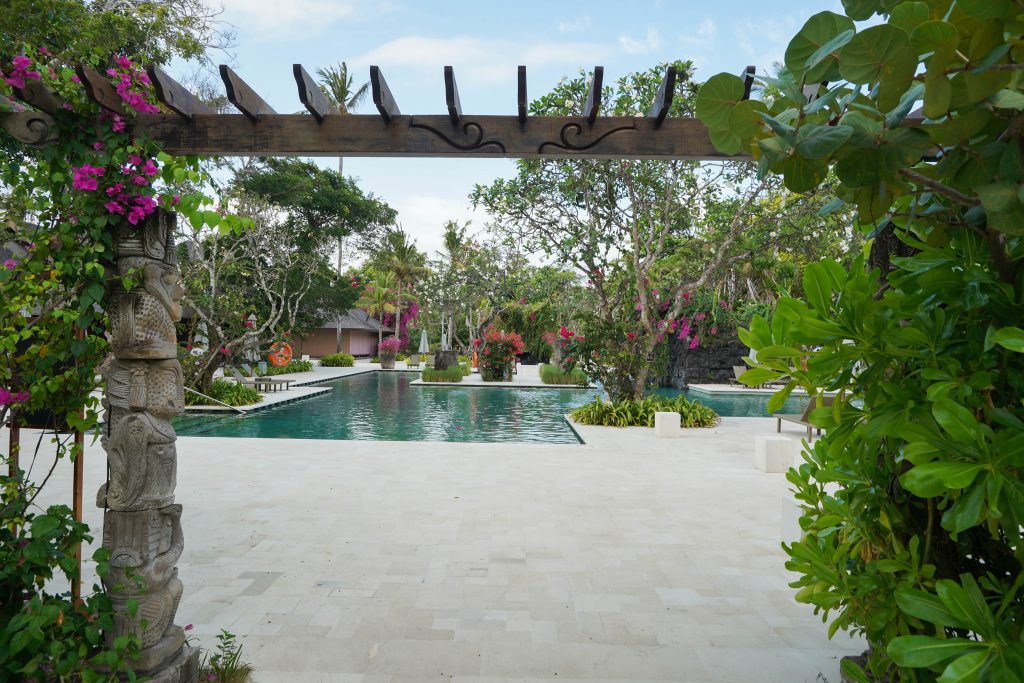
If the guest is familiar with the legendary Hyatt since the 70s, nothing has changed regarding the truest spirit of Hyatt’s Balinese tradition. The long hall designed by Kerry Hill remains intact, as does the modern brutalist hotel block with its cascade balcony. As landscape designers, we were led by the master plan from Tierra Design, responsible for the outdoor ambiance. Most of Made Wijaya and Bensley’s designs are left untouched, and we are working on a definitely new area closer to the coastline. The most obvious change will be the new swimming pool area adorned with majestic sculptures of ‘Goa Gajah’ and ‘Ganesha’ built-in local black stone. Around the pool, we still maintain the spirit of Balinese vibrance rich in flower culture.

The renovation work was completed in 2019, and the new face of Hyatt is surprising its loyal guests. A new generation of tourists is coming to Bali, expecting traditional hospitality with modern necessities under the rebranded entity: Hyatt Regency Bali. When we imagine how everything started in the 70s, with Hyatt standing as the pioneer of large-scale hospitality retreats, this update showcases that tradition and eternity lie in fluid adaptation to the generation. Joining forces with another top-tier designer of the world, SHL Asia leaves its mark on the legendary Hyatt.

P1326109

Interior and Artwork Design for Restaurant, Lounge, and Club The Madawa Bali

#Crafting Timeless Harmony

One of the interior and artwork design for @themadawabali is the grand dice bar, centrally located within the restaurant. This installation takes the form of a colossal lantern constructed from Kamasan paintings enclosed within an expansive golden brass cage. It narrates the epic tale of the Mahabharata, where the Pandavas faced defeat at the hands of the Kauravas in a fateful game of dice, leading to the humiliation of Draupadi. We chose to interpret this concept through Kamasan paintings due to their narrative focus, often weaving multiple stories and perspectives into a single composition. Kamasan painting is a classical Balinese art form known for its meticulous attention to detail, aiming for perfection in lines, forms, and color composition.

Where Culture and Luxury Converge

Immerse yourself in our interior design masterpiece—a harmonious fusion of cultural elements and opulence, drawing inspiration from a segment of the Mahabharata epic that exudes intimacy and seclusion. We elevate the essence of the Mahabharata story, a treasure of Balinese culture, by creating a space that not only celebrates its rich heritage but also exudes an unmistakable sense of luxury.

With exceptional craftsmanship, our Kamasan lantern is meticulously crafted, capturing the mesmerizing details of the Mahabharata narrative. This painting encapsulates varying perspectives, offering a broad spectrum of interpretations for visitors seeking a deeper understanding of this epic tale. From the opulence of the golden cage to the richness of colors within the painting, every element within @themadawabali has been thoughtfully designed to create an unforgettable experience for our patrons.

We highly value close collaboration with our clients. Our goal is not only to create an impressive interior design but also to ensure that the rich cultural elements of the Mahabharata are elegantly reflected in every aspect of the space. This endeavor represents our commitment to seamlessly intertwining culture and luxury, making each visit to @themadawabali a profound journey into Bali’s cultural heritage while offering a high level of exclusivity.

Our interior design crafts timeless harmony, reflecting a rich narrative and presenting unmatched luxury. This space is a beautiful amalgamation of art, culture, and opulence, destined to provide an unforgettable experience for all who enter. As a dedicated team, we take immense pride in presenting @themadawabali as a testament to our creativity and expertise in creating truly exceptional spaces.

P1119767

Architecture Design for Taroo Ubud with an Earthy and Natural Concept

Have you ever dreamed of having a beautiful place to relax and share moments with friends? For the owner with this dream, bringing to life a simple yet elegant café is the first step in an exciting journey. This café will be a manifestation of the down-to-earth concept that explores the beauty of nature through a variety of natural materials.

1. Gelam Wood Pergola

One of the distinctive elements of this café is the use of gelam wood pergolas. Gelam wood, with its warmth and unique grain, adds a deep sense of natural beauty to the café. The gelam wood pergola used as a roof also provides protection from excessive sunlight while allowing natural light to illuminate the café’s interior.

2. Alang-Alang Roof

The alang-alang roof is the perfect choice to infuse a rural touch into this café. It brings a soothing tropical atmosphere and maintains a comfortable temperature inside the space. Moreover, the alang-alang roof blends the beauty of nature with the café’s simple and down-to-earth concept.

3. Ulin Wood Columns with Rustic Style

The café’s columns are crafted from ulin wood, known for its remarkable durability. Ulin wood also adds a rustic touch that complements the café’s simple and natural concept. With appropriate finishing, the ulin wood columns become aesthetic elements that enrich the café’s interior design.

4. Simple Design with Wide Openings

This café is designed with a simple, open concept that allows natural sunlight to permeate the space. The wide openings create a comfortable atmosphere and connect the interior with the surrounding nature. This open space invites visitors to enjoy the outdoors while savoring the dishes and beverages offered.

5. Collaboration with Lush Softscape

To add a touch of natural greenery, the café incorporates various lush softscape elements. Strategically placed green plants provide a fresh and soothing ambiance.

6. Gelam Wood Pergola Area with a Bar

The gelam wood pergola area is one of the highlights of this café. Here, visitors can relish an open-air ambiance with comfortable shading. The pergola is equipped with a bar, allowing patrons to enjoy various coffee and cocktail options while taking in the natural scenery.

7. Relaxing Lounge

This café offers a comfortable lounge area, not just for coffee but also for relaxation. Visitors can unwind, read books, or simply enjoy the serene atmosphere. The lounge is designed with visitor comfort as a top priority.

8. Stage with “Artwork Cili” Design

The café also features a stage adorned with a unique artwork called “Artwork Cili.” This artwork serves as a focal point, adding an exclusive artistic touch to the café. The stage is used for live events such as music performances or poetry readings, enhancing the café’s appeal as a unique entertainment venue.

This café, with its earthy and natural concept, is a perfect escape from the hustle and bustle of the city, providing a serene setting for relaxing moments with friends. With the use of natural materials like gelam wood pergolas, alang-alang roofs, and ulin wood columns, the café creates a harmonious atmosphere with nature. Coupled with the artistic touch of “Artwork Cili” and various comfortable areas, this café is an inviting place for anyone seeking tranquility in the beauty of nature.

Artboard 26

SHL Asia Symbolically Handed Over The Accumulated Donation Results to RHI Bali

In this year, SHL Asia celebrates its 13th anniversary with a fresh and distinct concept from previous years. With the spirit of #SHLAsiaBerARTi, the company showcases their commitment to contributing to society and making a positive impact through Corporate Social Responsibility (CSR) programs. This event not only commemorates SHL Asia’s achievements but also highlights the significant meaning of creating with heart.

The event series commenced on June 17, 2023, with the implementation of a highly meaningful CSR program. SHL Asia collaborated with Rumah Harapan Indonesia (RHI) in Bali, a free sanctuary for underprivileged sick children in rural areas. This program marks the first step of the partnership with RHI Bali, aiming to provide positive contributions to the community in need.

The #SHLAsiaBerARTi theme adopted by the company holds a profound meaning, “Creating From the Heart.” This resonates with their partnership spirit with RHI Bali. RHI serves as a refuge for sick children, and through the “ART” project, SHL Asia invites these children to express their dreams through art. This is a beautiful way to bring a positive impact into their lives. The collaborative results manifest as artworks that will ultimately be sold, with the entire proceeds donated back to RHI Bali.

On August 16, 2023, SHL Asia symbolically handed over the accumulated donation results to RHI Bali. The total funds gathered reached IDR 11,329,705. Special appreciation was extended to generous donors who contributed through the #SHLAsiaBerARTi CSR program. Through art purchases, they’ve actively participated in creating a positive impact and inspiring others through art.

In the spirit of #SHLAsiaBerARTi, SHL Asia reiterates its commitment to continually contribute and fulfill its corporate social responsibilities. Through meaningful CSR programs, the company seeks to perpetuate positive change for those in need, offering new hope and inspiration for a better future.

photo_2023-06-19_10-41-59-2

Realizing Millions of Dreams through #SHLAsiaBerARTi

The series of events for SHL Asia’s 13th anniversary was held with a different concept than previous years. It commenced on June 17, 2023, through a Corporate Social Responsibility (CSR) program in collaboration with Rumah Harapan Indonesia (Bali) . This was followed by a mindset seminar attended by the entire SHL Asia team, and to enhance collaboration and teamwork, we also organized a team-building activity at Eka Raya Garden in Bedugul. The grand finale was the SHL Asia anniversary celebration on July 27, 2023.

#SHLAsiaBerARTi, the theme we embraced, carries the meaning of “Creating From the Heart.” (Berkarya Dari Hati). Rumah Harapan Indonesia (RHI) is a free shelter for sick children aged 0-17 who come from financially disadvantaged families residing in rural areas and are referred to major city hospitals for treatment. Through the “ART” project, we invited all the children to express their dreams through “art” and make a positive impact.

This collaboration with RHI Bali marks our first initiative, and the final artworks will be sold, with the proceeds donated in their entirety. We express our gratitude to the generous donors who contributed to Rumah Harapan Indonesia Bali Branch through the #SHLAsiaBerARTi CSR program. Through the purchase of their artwork, we have created with heart and delivered a positive influence through art. We sincerely appreciate your support through your donations. Together, we have become part of a tangible change in the lives of children at Rumah Harapan Indonesia (Bali). Every donation and artwork you purchase brings new hope, helps fulfill their dreams, and inspires them to achieve a better future.

With the spirit of #SHLAsiaBerARTi, SHL Asia is committed to continuously contributing to society and fulfilling our corporate social responsibility by delivering a positive impact through meaningful CSR programs for those in need.

SHL-1

Personalized Design Through Desa Kala Patra Philosophy

As a Bali based design consultant, SHL Asia committed to staying true to its roots while at the same embrace the inevitable changes in the island, thus SHL Asia humbly presents personalized design through Desa Kala Patra Philosophy.

Over the years, the tales of the island have spread across the ocean and as the words have reached the shores of other countries, more people are coming and falling over this island, calling it their home. While Bali is indeed a home to many, it is also a sanctuary, a safe space, and a creative ground where people are excited and inspired in some way yet well-suited and humbled in others. Even with numerous people and foreign influences, the island manages to keep their ground steady and their hundred years of culture flows deep within their vein to this day all thanks to one of their ancient philosophies, Desa Kala Patra.

Desa Kala Patra philosophy is an ancient belief system that holds profound wisdom and symbolism. The literal meaning of each word is Desa means ‘place’, Kala signifies ‘time,’ and Patra represents ‘situation.’ Together, they embody the cyclical relationship between space, time and situation. Desa Kala Patra is the unwritten inheritance, without doctrine and without the truest form. It is deeply ingrained in the daily lives of Balinese people which some may or may not realize.

The idea of this concept is the discretion to continuously improvise and re- interpret, to embed the tradition as something flexible without losing the sense of its heritage, to constantly respond to the needs of time and place without losing its essence. Back in the days, the Balinese believed that Desa Kala Patra served as a guideline to carry out good deeds.The recent interpretation, however, shows that the philosophy could be applied to almost every aspect in the society—religious activities, art performance, to the local custom and even the design approach of SHL Asia.

A quick example would be pelinggih (or the altar) in Balinese family house. Over the years the numbers are the same but the design, the carving and the material could be different every time it undergoes renovation, it all goes to the improvisation of each generation with the tend of fashion or trend influence that is happening in the certain area (place), in the particular time and situation. When it is implemented on the design, SHL Asia realizes that each client is unique, they have their own perspective on beauty and function thus SHL Asia responds to each place, time, and condition that combines into the dreams and needs of the client, as it is called personalized design.

Through Desa Kala Patra as the main guide, SHL Asia creates spaces that not only please the eye but also evoke the sense of balance, harmony, and spiritual connectedness with each client. The integration of Desa Kala Patra philosophy enables a profound exploration of the cyclical nature of time, emphasizing the importance of the preservation of cultural heritage and most importantly a personalized design practice that is unique and personal on so many levels.

shl asia architecture landscape interior lighting artwork

Welcome To SHL Asia, Alco Alisyaq, Principal of Landscape Design

shl asia architecture landscape interior lighting artwork

New year has yet brought new things to SHL Asia. Started from January 2022, we have welcomed the new principal of landscape design, Alco Alisyaq, to replace Atriawardhani, who sadly had to part ways with SHL Asia people. Alco has almost a decade of experience in landscape design and has previously worked in an internationally renowned landscape design consultant before finally joining SHL Asia. The past couple months was a transitioning period for Alco and now he is officially at your service, joining with Anang Rahman, as the Principal of Landscape Design of SHL Asia. We are thrilled to welcome Alco to the family along with other principals and make more exquisite landscape designs with the dynamic duo of Anang and Alco. Let’s get to know Alco better from his experience, his view on landscape as well as his future plan. 

shl asia architecture landscape interior lighting artwork
The Principal of SHL Asia

Alco was born in a small town of Singaraja in north of Bali. He moved to the big city of Surabaya when he was little and grew up in the city. Not until elementary school, he moved back to Bali to live in a small cluster by the sea with his family. Being close to nature, Alco started to enjoy exploring the area. He saw nature as his playground as he often went on adventure trying on new things from motorbike touring, hiking to snorkeling, which still become few of his hobbies to date. 

shl asia architecture landscape interior lighting artwork

Like many young adults, Alco took time in figuring out what he truly wanted to do in life. He listed all his strengths and weaknesses and realized how much he loved to draw and read as well as enjoying the outdoor. After doing some research, he found that architecture program would suit him best even when he did not necessarily fond of arithmetic. When he graduated from Architecture Engineering Study of Udayana University, Alco was determined to work in consultants and due to his curiosity nature, Alco always sought on new challenges. He had experience on architecture, contractor, interior to finally landed in one of the well-known landscape consultants in the island.

After years working in a landscape consultant, he found his call as a landscape designer for his love of nature and finally became the newest addition to SHL Asia as one of the principals of landscape design. When we asked Alco how important landscape design is to a project, he stated that landscape design is as essential as the building itself. It balances out the whole composition of the design and allows the residents to have space for outdoor activities which he believes it is vital considering the situation nowadays. He understands the benefit of being close to nature (e.g. plants and greeneries) without necessarily being close to the natural environment. Alco admires tropical design with natural feeling yet still presents clean and composed overall look.

shl asia architecture landscape interior lighting artwork
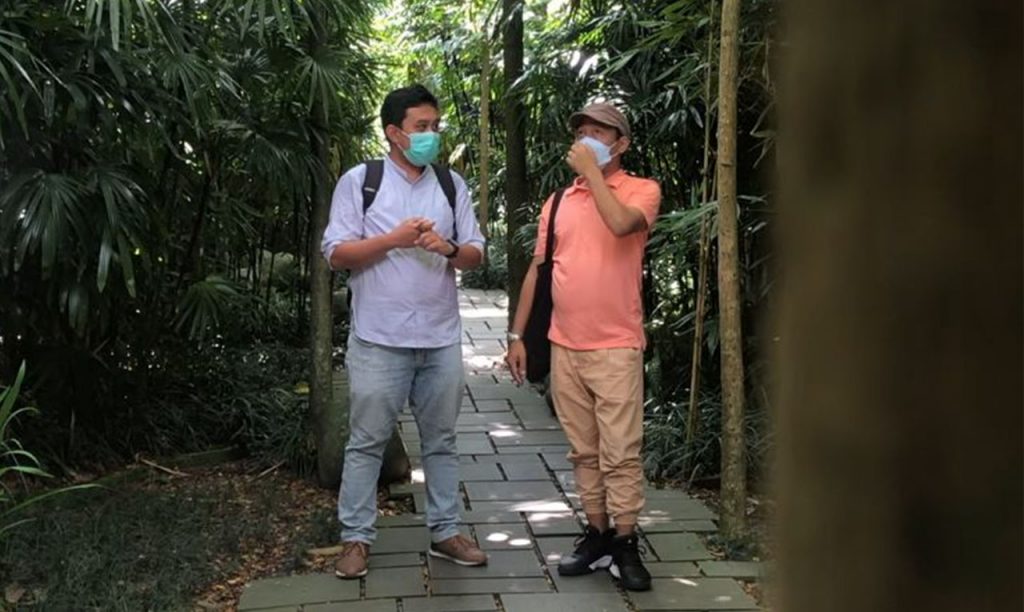
Alco and Jung Yat on-site visit
Meeting with a client

His creative process in making landscape design include brainstorming and zoning. Initially, he would take keywords from the client’s brief and starts the designing journey from macro to micro where zoning or dividing the area into few different zones helps him understand the function, type of softscape and hardscape for every zone. Then he would brainstorm and research on references to find the connecting line for all zones and integrated one another to finally make the concept whole.

Finally, to wrap it up, we asked Alco what’s next for him? For Alco, SHL Asia has become his new home. He found a team of passionate people with integrated system that deliver unique design experience with the value of culture, art, and nature which he found synergy with. He wishes to grow together with SHL Asia and continue making landscape design that can answer the dream of valuable people. We are absolutely excited to see what’s coming this year.

Cheers,
SHL Asia team